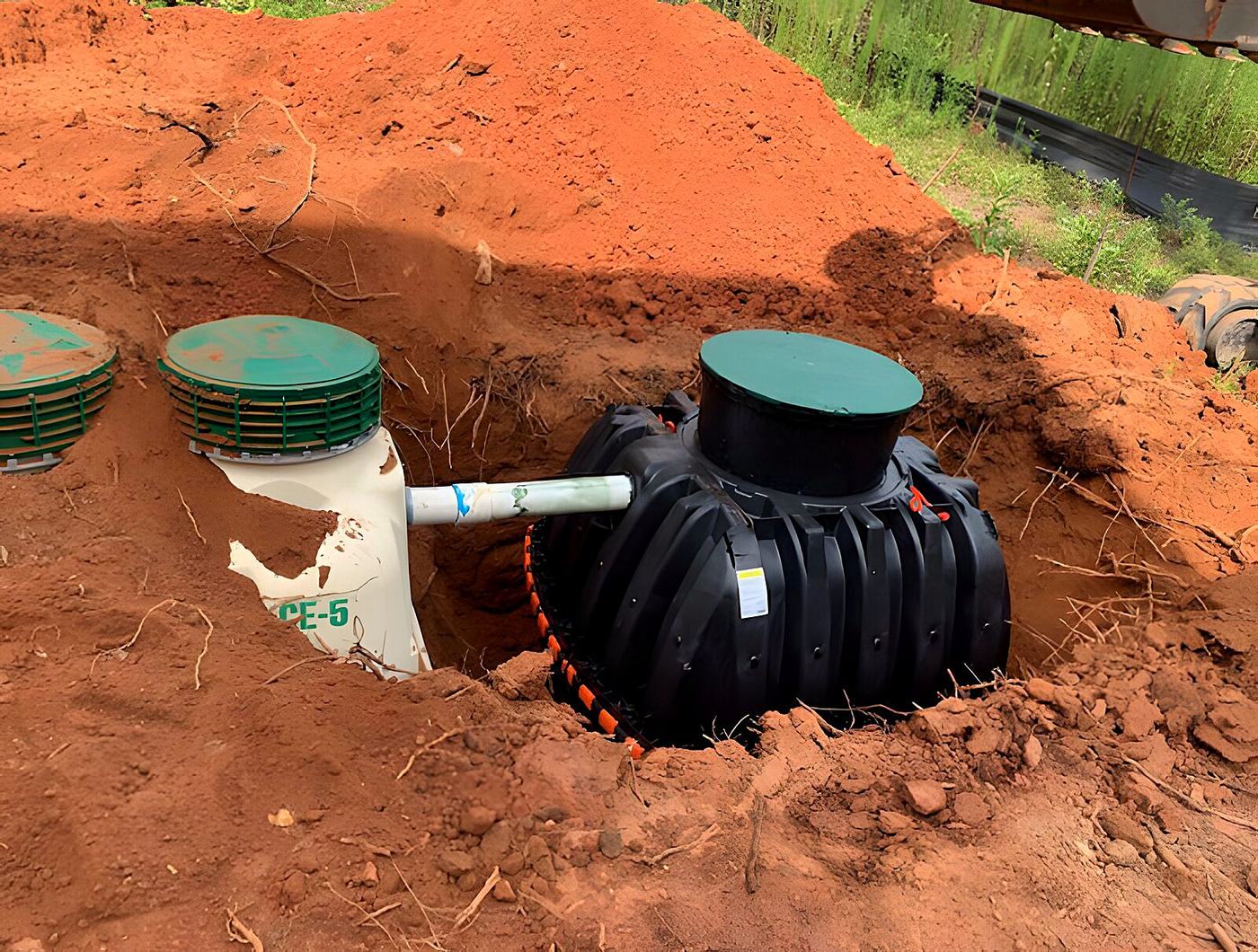
If your home isn't on city sewer, your septic system quietly handles every drop of water that leaves the house. Understanding how it works, in about five minutes, is the single best way to avoid an expensive surprise down the road.
What a septic system actually does
A septic system is a small, on-site wastewater treatment plant buried in your yard. Everything that goes down a drain or toilet flows to it, gets separated and treated, and the cleaned water is returned safely to the ground. It does this with no pumps to babysit and very little electricity, as long as it's maintained.
How a conventional system works
A traditional system has two main parts:
- The tank. Wastewater sits here long enough for solids to sink to the bottom (sludge) and grease to float to the top (scum). Bacteria break down what they can. The clarified liquid in the middle flows out.
- The drain field. That liquid disperses through a network of perforated pipes into the soil, where nature finishes the job, filtering it before it reaches groundwater.
It's simple and reliable. The catch: the tank keeps accumulating sludge, and if it's never pumped, solids eventually push into the drain field and clog it. That's the failure that gets expensive.
Where advanced treatment (Fuji Clean) fits
Some Lowcountry lots can't support a conventional drain field, tight footprints, high water tables, or ground near marshes and waterways. An advanced treatment unit like Fuji Clean adds an aeration stage that uses oxygen and bacteria to treat the wastewater to a far higher standard before it ever reaches the soil, often 10× cleaner than a conventional tank. On the tough lots, it's frequently the only DHEC-approved option.
Conventional or advanced, every system depends on the same thing: the solids getting removed on schedule and the components staying healthy. That's maintenance, and it's the whole ballgame.
Why maintenance matters
Here's the math that surprises people. A routine pump-out and inspection costs a few hundred dollars. A failed, clogged drain field, the thing that happens when a tank goes years without service, can cost many thousands to replace, plus the mess and the downtime.
Routine maintenance does three things:
- Removes accumulated sludge before it can reach and ruin the drain field.
- Catches small problems, a failing baffle, an early pump issue, while they're still small.
- Keeps advanced systems (Fuji Clean and other ATUs) under warranty, which requires documented service.
For most Lowcountry households, that means a pump-out every 3 to 5 years and an annual (or bi-annual, for advanced systems) inspection. We can tell you exactly where your system stands rather than guessing.
Warning signs to watch for
Call us if you notice any of these, they're the early language of a system in trouble:
- Slow drains or gurgling throughout the house
- Sewage odors indoors or over the yard
- Soggy ground or unusually green, lush grass over the drain field
- Any backup, or an alarm on an advanced system
Frequently asked
How often should a septic tank be pumped?
For an average Lowcountry household, every 3 to 5 years. Larger families or smaller tanks may need it every 2 to 3. An inspection tells you where you actually stand rather than guessing.
Conventional vs. advanced treatment, what's the difference?
A conventional system settles solids in a tank and disperses liquid through a drain field. An advanced treatment unit (ATU) like Fuji Clean adds an aeration stage that treats wastewater to a much higher standard, required on tight lots, high water tables, and sites near marshes or waterways.
Are enzyme additives worth buying?
No. A healthy tank generates its own bacteria. The marketing is better than the product, spend the money on a real pump-out schedule instead.
Does maintenance really save money?
Yes. A routine pump-out and inspection costs a few hundred dollars; a failed drain-field replacement can run many thousands. Maintenance catches small problems before they become system failures.