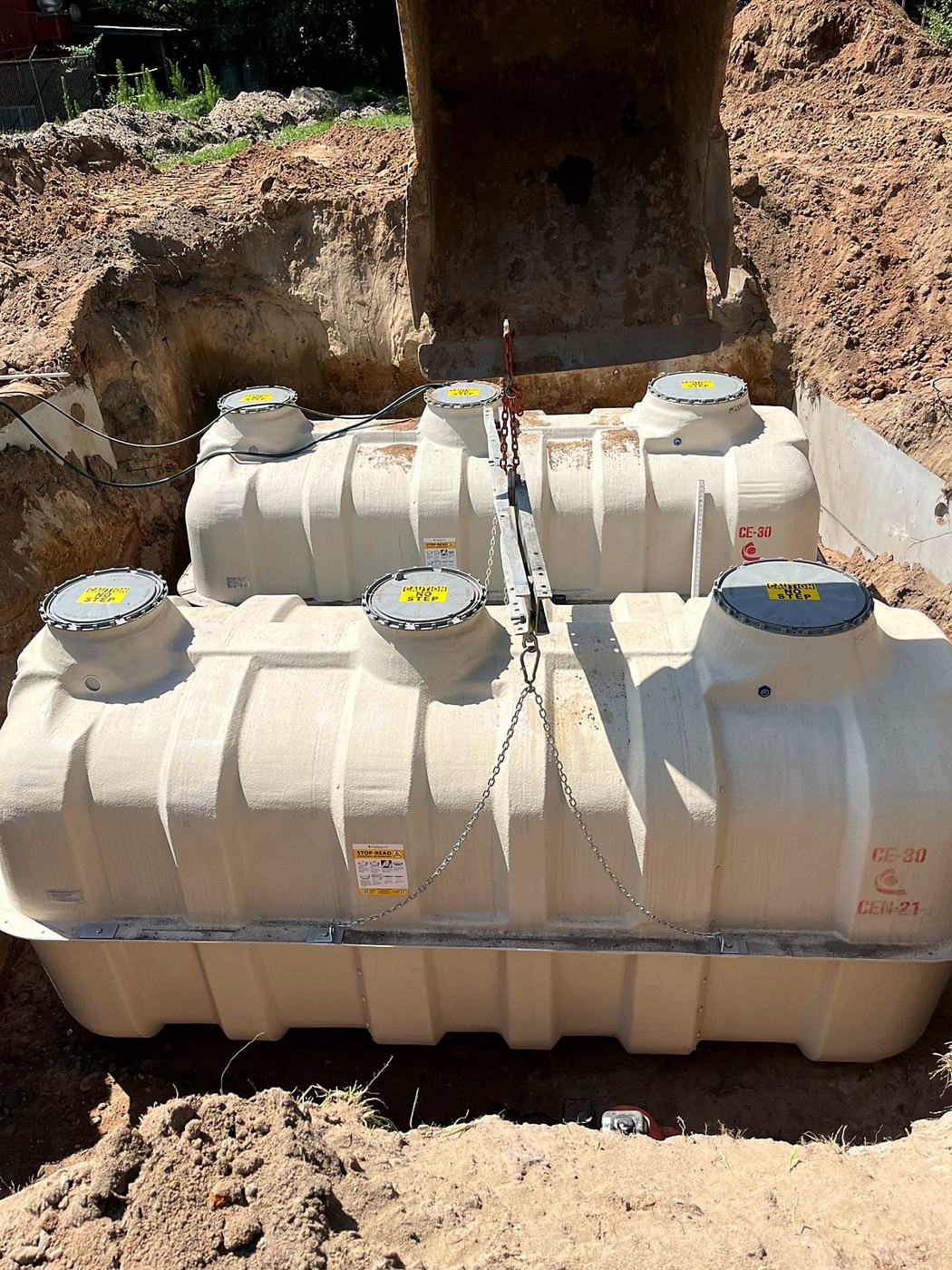
Advanced treatment isn't an upsell, it's what some lots require to pass DHEC and protect the water around them. Plenty of properties do just fine on a conventional system. The deciding factor is your soil and site conditions.
When you likely need advanced treatment
If any of these describe your lot, Fuji Clean is often the answer, and sometimes the only DHEC-approved option:
- High water table. Common near the coast, where a conventional drain field can't get the separation it needs.
- Small or tight lot. Not enough room for a full conventional drain field. Fuji Clean's compact footprint fits.
- Near a marsh, creek, or lake. Sensitive setbacks require cleaner effluent than a conventional tank produces.
- Poor-perc soil. Tight clay or slow-draining soil that a conventional field can't handle.
- A conventional system already failed. If the lot couldn't support one before, advanced treatment is usually the fix.
When conventional is fine
If your lot is roomy, well-drained, and away from sensitive water, a conventional septic system is likely all you need, and we'll tell you that. We don't sell advanced treatment where it isn't warranted.
The soil test decides it, not us. We walk the lot, review the perc and setbacks, and give it to you straight. DHEC makes the final call through the permit.
What Fuji Clean costs to own
Advanced systems cost more up front and require a bi-annual service to keep the manufacturer warranty in force, roughly twice a conventional annual plan. On a lot that can't support conventional, though, it's the difference between building and not building. See the full Fuji Clean page →
Frequently asked
Who decides, you or DHEC?
DHEC issues the permit based on the soil evaluation and site conditions. We do the assessment and design; the permit confirms it.
Do you install Fuji Clean outside the Lowcountry?
Yes, Fuji Clean sales and installation are statewide, including the Upstate. Our routine service stays local to the tri-county.
How long does a Fuji Clean install take?
Typically 3–5 days of fieldwork once permits are approved. Permitting itself usually runs 2–4 weeks depending on the county.